




X-Solar Debuts Curved Tiles, Flat Tiles, Color Steel Tiles and 560W Flexible Modules at SNEC 2026
2026-10-20
X-Solar at SNEC 2026: A Full BIPV Roofing Line-Up That Kept Buyers at the Booth
In June 2026, X-Solar took part in SNEC, one of the world's largest photovoltaic exhibitions, held in Shanghai. Over the show days our booth welcomed a continuous stream of distributors, EPC contractors, roofing specialists and project developers from Europe, Southeast Asia, the Middle East and Latin America. The centrepiece of our display was a complete building-integrated photovoltaic (BIPV) roofing portfolio: curved roof tiles, flat roof tiles, color steel roof tiles and 560W flexible modules.
The result exceeded our expectations. Buyers were able to walk around full-scale roof mock-ups, compare surface finishes side by side and see how each product integrates into real residential, commercial and industrial roofing systems. Many visitors returned with their technical teams for a second and third visit, and a number of concrete project discussions are now moving into the sampling and quotation stage.
Four Product Families, One Integrated Roofing Solution
Rather than presenting isolated panels, X-Solar showed a complete roof-to-module solution. Each product family was selected to solve a specific roofing challenge:
Product
Typical Application
Key Advantages
Curved Roof Tiles
Villas, heritage-style housing, pitched residential roofs
Traditional curved-tile aesthetics with hidden photovoltaic cells; interlocking waterproof structure; no compromise on roof appearance
Flat Roof Tiles
Modern residential roofs, townhouses, commercial rooftops
Clean planar finish, high coverage per square metre, fast dry installation and easy maintenance access
Color Steel Roof Tiles
Factories, warehouses, logistics parks, agricultural buildings
Large-span metal roofing with integrated PV; lightweight, corrosion resistant and suitable for retrofit projects
Flexible 560W Modules
Curved roofs, carports, temporary structures, lightweight roofs
High power output in a bendable, adhesive-mounted format; no drilling required; ideal where load capacity is limited
What Visitors Responded To
Real roof mock-ups. Buyers could judge colour, texture and tile strength with their own hands instead of looking at catalogue photos.
The 560W flexible module. Its combination of high output and bendability drew particular attention from contractors working on curved and lightweight roofs.
One supplier, one warranty chain. Roofing contractors valued the ability to source tiles and modules together, simplifying procurement and after-sales responsibility.
Installation speed. Live demonstrations of the interlocking and adhesive mounting methods answered the most common concern raised by EPC teams: labour cost.
Certified Quality and Steadily Growing Export Volume
X-Solar products are CE and TUV certified, and every shipment is supported by full test reports, a traceable quality system and export documentation prepared by our in-house trade team. This is one of the main reasons our export volume has continued to rise year after year: repeat orders from existing distributors now form a substantial share of our annual shipments, alongside a growing number of new project-based buyers.
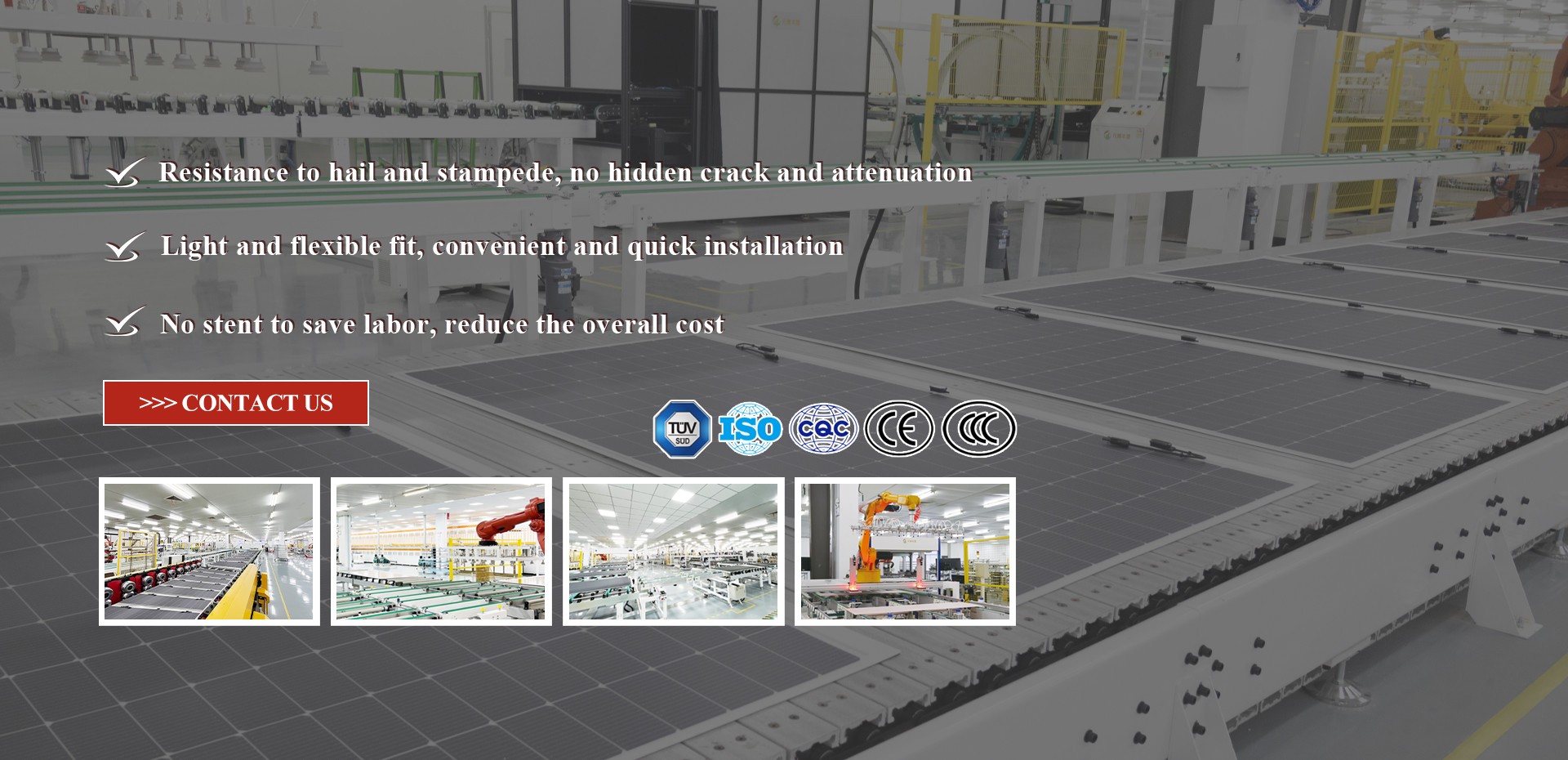
Our production base combines automated lamination and encapsulation lines with strict incoming-material inspection, so that roof tiles and flexible modules leaving the factory meet the same electrical and mechanical standards regardless of destination market. For buyers in the EU, we supply the technical file package required for local grid connection and building approval.
Looking Ahead
Following SNEC 2026, X-Solar is expanding its BIPV product range and increasing capacity for flexible modules to shorten lead times. Sample kits covering all four product families are available for qualified distributors and project developers.
If you are sourcing BIPV roofing products — curved tiles, flat tiles, color steel tiles or flexible modules — our export team is ready to discuss specifications, sample orders and project pricing. Contact X-Solar today and let us build the right roofing solution for your market.
View More
X-SOLAR Germany C&I Rooftop Project (Hatten)
2026-09-21
In Hatten, Germany, a warehouse rooftop has become the facility’s green power source.
The project deployed 980 pieces of Xingsheng Energy X-SOLAR 560W flexible PV modules, with a total installed capacity of 548.8kWp. Based on an estimated annual yield of roughly 900kWh/kWp for northern Germany, the system is projected to generate around 494,000 kWh of green electricity per year.
If most of the generated power is consumed on-site by the enterprise, with reference to Germany’s average non-residential electricity price of €0.2264/kWh, the project can theoretically cut annual electricity purchase costs by approximately €112,000. Calculated against Germany’s 2025 average carbon emission factor of 344 gCO₂/kWh, it will reduce CO₂ emissions by about 170 tonnes annually.
From laying the first panel to full commissioning, installation of all 980 modules was completed within just one week. What was once merely a storage building has now become a key asset for the business to produce clean power and lower energy expenses.
A PV Solution Tailored for Light-load Color Steel Rooftops
The warehouse features a color steel roof with limited load-bearing capacity. Meanwhile, the client wanted to preserve roof integrity and avoid potential leakage risks caused by roof drilling.
The core challenge was deploying a PV system under such restrictive rooftop conditions. To match the actual site requirements, the project adopted Xingsheng Energy X-SOLAR 560W frameless flexible PV modules. Each module weighs approx. 8.4 kg, with an areal density of only 3.1 kg/㎡ and a thickness of roughly 2.7 mm. The ultra-light, thin profile makes it perfectly suitable for light-load color steel rooftops and unlocks flexible installation options.
Structural Adhesive Bonding: 980 Modules Installed in 7 Days
Based on the rooftop characteristics, this project uses structural adhesive bonding. Flexible PV modules are attached directly onto qualified color steel surfaces, with no roof penetration required.
This installation method minimizes disturbance to the original roof structure and waterproof layers, eliminating on-site rack mounting work. The combination of lightweight modules and adhesive installation greatly simplifies construction workflows.
Note: Adhesive mounting is not universally applicable to all buildings. Before implementation, a full assessment of roof substrate, structural load, wind load, waterproof drainage and local codes must be performed to validate the proper installation solution for each project.
From Warehouse Rooftop to On-site Green Power Generator
Commercial and industrial buildings such as warehouses and factories typically feature large rooftop areas, making them prime candidates for distributed solar PV systems.
However, roof structure, load capacity and waterproof requirements vary widely across buildings. For color steel rooftops with limited load capacity where penetration-free installation is preferred, lightweight flexible modules deliver a highly adaptable alternative.
The completed Hatten project added a 548.8kWp rooftop PV system while preserving the warehouse’s original storage function. Previously underutilized roof space is now generating renewable power for the company, cutting energy costs and supporting low-carbon operations.
Project Label: Xingsheng · Germany C&I Rooftop Project | X-SOLAR · Germany Commercial & Industrial Rooftop Project
View More
560W Flexible Solar Modules Power German Commercial Rooftop Project with Excellent Results
2026-09-09
560W Flexible Solar Modules Light Up a German Commercial Rooftop Project
Germany continues to lead Europe's commercial solar adoption, and a newly completed commercial and industrial rooftop installation is drawing attention across the region. The project, built with 560W flexible solar modules, has delivered excellent results since commissioning and now serves as a demonstration reference for lightweight rooftop photovoltaics in the local market.
Event Overview
This German commercial and industrial rooftop project was developed to help the facility owner cut grid electricity costs while keeping the existing metal roof structure completely untouched. Conventional framed glass panels were ruled out due to their heavy weight and the extensive mounting systems they require. The solution chosen was our 560W flexible solar modules, a high-power lightweight product family designed for commercial rooftops.
Why 560W Flexible Solar Modules
Lightweight design: low weight per square meter allows direct installation on metal-clad commercial roofs without structural reinforcement.
High power output: 560W per module reduces module count, cabling and installation labor for the same system capacity.
Fast installation: simple mounting process shortens construction time and lowers total project cost.
Durable construction: weather-resistant materials withstand wind, snow and hail loads in German climate conditions.
Proven energy yield: high-efficiency cells deliver stable, reliable power generation year-round.
Project Highlights
Project typeCommercial & industrial rooftop solar system
LocationGermany
Core product560W flexible solar modules
Installation methodLightweight direct rooftop mounting
Application scenarioCommercial & industrial building rooftop
Current statusOperating with excellent results
Excellent Results on Site
Since the system was energized, the project has performed strongly:
Stable power generation: the rooftop system reliably offsets daytime electricity consumption of the facility.
Lower energy costs: the building owner enjoys reduced grid purchases and improved energy self-sufficiency.
Structure preserved: the lightweight installation kept the original rooftop intact, protecting the building warranty and waterproofing layer.
Attractive return: lower mounting costs combined with high module output support a fast payback period.
Carbon reduction: clean solar electricity cuts the facility's carbon footprint and supports its sustainability targets.
A Demonstration Project for the Local Market
The visible success of this installation has made it a demonstration reference in the region. Neighboring businesses, energy consultants and local authorities have shown strong interest in the project, and several follow-up inquiries have already been generated. The site proves that commercial and industrial rooftops can adopt high-power solar generation without heavy structures or complex civil works.
Looking Ahead
This German project marks another milestone in the adoption of flexible high-power solar modules across Europe. For distributors, EPC contractors and project developers, it demonstrates a practical and cost-effective path to solar energy on commercial and industrial buildings.
Planning a commercial rooftop solar project? Contact our team to learn how 560W flexible solar modules can fit your site.
View More
Flexible Solar Modules at Munich Exhibition | European Market Expansion News
2026-09-03
1. Exhibition Overview: A Strong Presence in Munich
Our company recently showcased its latest flexible solar modules at an international solar exhibition in Munich, Germany, one of the most influential renewable energy events in Europe. During the exhibition, our booth attracted a steady stream of visitors, including solar distributors, EPC contractors, project developers and industry professionals from Germany and across Europe. The strong interest in our flexible photovoltaic solutions confirmed the growing demand for innovative, lightweight solar products in the European market.
2. Product Technical Highlights: Flexible Solar Modules
At the heart of our showcase were our flexible solar modules, designed to overcome the limitations of traditional rigid panels. Key technical advantages presented at the exhibition included:
Ultra-lightweight design — significantly lighter than conventional glass panels, making installation easier and reducing structural load
Excellent flexibility — the modules can adapt to curved and irregular surfaces, opening up new installation scenarios
High power output — advanced cell technology delivers strong conversion efficiency and reliable energy yield
Durable construction — weather-resistant materials ensure stable performance in diverse climates across Europe
Easy installation — simplified mounting reduces labor time and overall system cost
3. European Market Application Scenarios
European customers showed particular interest in the practical applications of flexible photovoltaic technology:
Low load-bearing rooftops — ideal for commercial and industrial buildings where heavy glass panels cannot be installed
Curved and complex roofs — flexible modules follow the roof contour, maximizing available installation area
Building-integrated photovoltaics (BIPV) — a perfect fit for modern architecture and renovation projects that demand aesthetics
Mobile and portable power — suitable for vehicles, caravans, boats and off-grid applications
With Europe's accelerating energy transition and growing demand for decentralized solar power, flexible modules are becoming a preferred choice for projects where traditional panels are not viable.
4. On-Site Business Negotiations and Industry Exchange
Beyond the product display, the exhibition served as an important platform for business negotiations and industry exchange. Our sales and technical teams held in-depth discussions with numerous prospective partners on topics such as:
Distribution and agency cooperation in Germany and neighboring markets
Tailored solutions for specific rooftop and project requirements
Technical support, after-sales service and logistics arrangements
Latest industry trends, policy drivers and customer preferences in the European solar sector
These conversations not only generated valuable business opportunities but also provided deep insights that will guide our product development and market strategy in Europe.
5. Overseas Strategy and Future Outlook
Participating in the Munich exhibition is a key step in our overseas expansion strategy. Looking ahead, we will continue to strengthen our presence in Europe by:
Expanding our partner network across key European markets
Enhancing local technical support and after-sales service capabilities
Continuously innovating flexible solar technology to meet evolving market needs
Building long-term, win-win cooperation with distributors, installers and project developers
We are confident that our high-quality flexible solar modules, combined with a customer-centric approach, will create lasting value for European partners. We look forward to turning the connections made in Munich into successful projects and a brighter sustainable future together.
View More
Flexible Solar Modules Shine at Munich Exhibition: Showcasing Innovation and Expanding European Presence
2026-09-03
1. Exhibition Overview: A Strong Presence in Munich
Our company recently showcased its latest flexible solar modules at an international solar exhibition in Munich, Germany, one of the most influential renewable energy events in Europe. During the exhibition, our booth attracted a steady stream of visitors, including solar distributors, EPC contractors, project developers and industry professionals from Germany and across Europe. The strong interest in our flexible photovoltaic solutions confirmed the growing demand for innovative, lightweight solar products in the European market.
2. Product Technical Highlights: Flexible Solar Modules
At the heart of our showcase were our flexible solar modules, designed to overcome the limitations of traditional rigid panels. Key technical advantages presented at the exhibition included:
Ultra-lightweight design — significantly lighter than conventional glass panels, making installation easier and reducing structural load
Excellent flexibility — the modules can adapt to curved and irregular surfaces, opening up new installation scenarios
High power output — advanced cell technology delivers strong conversion efficiency and reliable energy yield
Durable construction — weather-resistant materials ensure stable performance in diverse climates across Europe
Easy installation — simplified mounting reduces labor time and overall system cost
3. European Market Application Scenarios
European customers showed particular interest in the practical applications of flexible photovoltaic technology:
Low load-bearing rooftops — ideal for commercial and industrial buildings where heavy glass panels cannot be installed
Curved and complex roofs — flexible modules follow the roof contour, maximizing available installation area
Building-integrated photovoltaics (BIPV) — a perfect fit for modern architecture and renovation projects that demand aesthetics
Mobile and portable power — suitable for vehicles, caravans, boats and off-grid applications
With Europe's accelerating energy transition and growing demand for decentralized solar power, flexible modules are becoming a preferred choice for projects where traditional panels are not viable.
4. On-Site Business Negotiations and Industry Exchange
Beyond the product display, the exhibition served as an important platform for business negotiations and industry exchange. Our sales and technical teams held in-depth discussions with numerous prospective partners on topics such as:
Distribution and agency cooperation in Germany and neighboring markets
Tailored solutions for specific rooftop and project requirements
Technical support, after-sales service and logistics arrangements
Latest industry trends, policy drivers and customer preferences in the European solar sector
These conversations not only generated valuable business opportunities but also provided deep insights that will guide our product development and market strategy in Europe.
5. Overseas Strategy and Future Outlook
Participating in the Munich exhibition is a key step in our overseas expansion strategy. Looking ahead, we will continue to strengthen our presence in Europe by:
Expanding our partner network across key European markets
Enhancing local technical support and after-sales service capabilities
Continuously innovating flexible solar technology to meet evolving market needs
Building long-term, win-win cooperation with distributors, installers and project developers
We are confident that our high-quality flexible solar modules, combined with a customer-centric approach, will create lasting value for European partners. We look forward to turning the connections made in Munich into successful projects and a brighter sustainable future together.
View More
