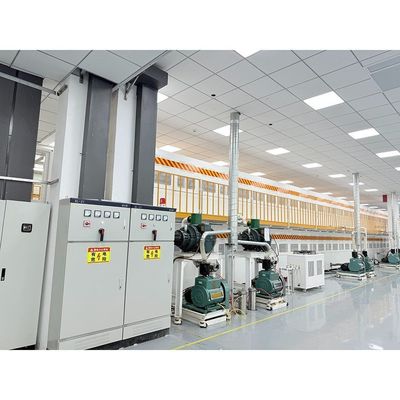
Automatic Thermal Film Laminating Machine Hot Press Dry Solar Module Manufacturing Line
Frequently Asked Questions

Operation & Usage
Q: What preparations do I need to make when using a laminating machine for the first time?
A: Carefully read the user manual to understand operation methods and parameter settings. Check equipment for damage and ensure all components are securely connected. Conduct power-on and ventilation trial runs to verify system functionality. Use standard testing materials for trial production to familiarize with the operation process and observe component quality.
Q: How to set hot pressing parameters such as temperature, pressure, and time?
A: Use the device's built-in control system interface to input required temperature values, pressure settings based on module size and process requirements, and hot pressing time needed for adhesive film melting to complete solidification. The system will automatically control the entire hot pressing process according to set parameters.
Q: What are the precautions for placing and removing photovoltaic module materials?
A: Ensure all material layers are laid flat in correct order without debris. Operate quickly to minimize exposure time to non-vacuum environments. When removing components, wait for sufficient cooling to safe temperatures to avoid burns and handle carefully to prevent damage.
Testing & Quality Control
Q: How to determine whether photovoltaic module quality is qualified?
A: Visually inspect for bubbles, delamination, or adhesive film overflow. Use professional testing equipment to check electrical parameters including open circuit voltage, short circuit current, and fill factor. Utilize EL testers to detect internal hidden cracks and other defects for comprehensive quality assessment.
Q: If bubbles appear in produced photovoltaic modules, what could be the problem?
A: Possible vacuum system malfunction including insufficient vacuum pump suction, air leakage in vacuum pipelines, or poor vacuum valve sealing. Inaccurate temperature control causing poor adhesive film melting. Material quality issues such as poor adhesive film quality or moisture content.
Maintenance & Upkeep
Q: What are the daily maintenance tasks for the laminating machine?
A: Clean equipment exterior to remove dust and oil stains. Regularly clean residual adhesive film and debris from working chamber. Check operation status of key components including heating plates, vacuum pumps, and sensors for abnormal sounds or overheating. Monitor equipment operating parameters for deviations from normal ranges.
Q: How long does it take to perform comprehensive maintenance?
A: Recommended every month or quarter depending on equipment manual and usage frequency. Includes deep cleaning of all systems, precision calibration of key components, replacement of worn parts, and re-lubrication of lubrication points to maintain optimal operating condition.
Q: How to maintain the heating plate?
A: Regularly clean residual adhesive film and impurities from heating plate surface using suitable tools to avoid scratching. Check heating performance for local lack of heat or uneven temperature. Implement protective measures against moisture and dust during long-term non-use periods.
Troubleshooting
Q: What could cause the heating plate not to heat up after startup?
A: Power connection issues including broken power cords or loose plugs. Damage to internal heating elements such as burned resistance wires. Control system temperature setting errors or malfunctioning electrical components like relays controlling heating plate power supply.
Q: How to troubleshoot slow vacuum pumping speed?
A: Check vacuum pump operation for normal motor function and abnormal noises. Inspect vacuum pipelines for blockages or leaks by examining connection seals and internal obstructions. Verify vacuum valve is fully open without valve core damage. Assess vacuum pump impeller wear or poor pump body sealing affecting pumping capacity.
Q: What should be done for unstable pressure display?
A: Check pressure sensor functionality and accuracy for calibration needs. Inspect pressure regulating valves for flexibility, blockages, or damage requiring cleaning or replacement. Examine entire pressure system pipeline for leaks causing pressure instability and perform sealing treatment at leakage points.
Production Efficiency
Q: How to improve production efficiency?
A: Optimize operation processes to reduce material handling and equipment waiting time through proper personnel scheduling. Precisely tune equipment parameters to appropriately shorten hot pressing time while maintaining quality. Regular maintenance ensures optimal operating condition and reduces repair downtime.
Q: Is there significant efficiency difference among different machine models?
A: Yes, depending on equipment design capacity, heating and pressure system performance, and automation level. Large-scale, highly automated machines with fast heating and pressing speeds process more components simultaneously or complete processes faster. Smaller, manually operated machines with average system performance typically have lower efficiency.
Safety
Q: What safety precautions should be taken?
A: Ensure operators receive professional training on equipment operation and emergency response. Strictly prohibit inserting hands or body parts into working chamber during operation. Regularly check equipment grounding to prevent electrical hazards. Implement protective measures and warning signs for high-temperature and high-pressure components.
Q: What safety protection devices are included?
A: High temperature alarm devices that automatically stop heating when exceeding safe limits. Pressure overload protection that immediately cuts pressure source when exceeding safe range. Emergency stop buttons for quick equipment shutdown during emergencies. These ensure operator safety and prevent equipment damage.
Application Scope
Q: Can laminating machines be used for all photovoltaic module types?
A: Most common photovoltaic modules including crystalline silicon and thin film types can be produced. For special structure and material modules, parameter adjustments, component modifications, or specialized fixtures may be required, though basic principles and hot pressing processes remain similar.
Q: What adjustments are needed for different module specifications?
A: Adjust hot pressing parameters including pressure size according to component dimensions to prevent damage or weak bonding. Modify heating plate temperature distribution settings for uniform heating of large components. Adjust hot pressing time based on component thickness to ensure complete adhesive film melting and solidification.
Equipment Selection
Q: What factors should be considered when choosing a laminating machine?
A: Consider production scale and capacity requirements - large output needs large, high-speed automated equipment. Evaluate precision control capabilities for temperature, pressure, and time parameters. Assess equipment stability, reliability, and brand reputation. Consider maintenance costs, operation convenience, and after-sales service quality.
Q: What are the advantages of imported versus domestic laminating machines?
A: Imported machines may offer advanced process technology with superior precision control and stability, suitable for high-quality component production, though typically at higher prices with longer part supply cycles. Domestic machines provide high cost-effectiveness for conventional production needs with faster after-sales response and lower maintenance costs, though may have technology gaps in high-end applications.


 Your message must be between 20-3,000 characters!