MDF Thermal Film Laminating Machine Hot Press Dry Compressed Air Pressure 0.7 - 0.8MPa
Company Profile

Beijing X-Solar Energy Co., Ltd. was founded in 2020 and is headquartered in Beijing. We are a science and technology innovative energy enterprise specializing in future cell R&D, flexible photovoltaic modules, building photovoltaic module production, high-end equipment manufacturing, production line delivery, and AI-CITY smart energy management services.
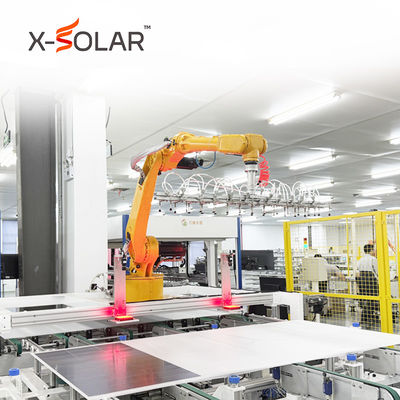
In July 2023, our first demonstration factory, Jiangsu X-Solar Green-building Technology Co., Ltd., was established in Jiangyin CNBM Jetion Industrial Park. Simultaneously, our wholly-owned equipment company delivered the world's first "three-in-one" automatic production line for the Jiangyin base. This production line is compatible with three product categories: X-Solar Light shadow series (flexible PV modules), X-Solar Light rhyme series (building PV tile modules), and X-Solar Light Curtain series (building PV wall modules), plus customized products.
X-Solar PV series products integrate architectural aesthetics, comply with design specifications, and create energy value, receiving widespread recognition and praise from domestic and international customers.
In 2024, we expanded with regional centers in Shanghai and Guangzhou, established the Hong Kong X-Solar Future Energy Research Institute, and set up overseas sales companies in Australia, Italy, Germany, Saudi Arabia, and Argentina. Our global布局 provides sustainable energy products and services worldwide, contributing to "carbon neutrality and carbon peak" goals.
Frequently Asked Questions
Operation and Usage
Q: What preparations do I need to make when using a laminating machine for the first time?
A: First, carefully read the user manual to understand operation methods and parameter settings. Check the equipment for damage and ensure all components are securely connected. Conduct power-on and ventilation trial runs to verify system startup. Finally, use standard testing materials for trial production to familiarize yourself with the operation process and observe product quality.
Q: How to set hot pressing parameters such as temperature, pressure, and time?
A: Set parameters through the device's control system interface. Enter required temperature values, pressure settings based on module size and process requirements, and hot pressing time needed for adhesive film melting to complete solidification. The system will control the entire hot pressing process according to these parameters.
Q: What are the precautions for placing and removing photovoltaic module materials?
A: Ensure all material layers are laid flat in correct order without debris. Operate quickly to minimize exposure time to non-vacuum environments. When removing components, wait for sufficient cooling to safe temperatures and handle carefully to prevent damage.
Testing and Quality Control
Q: How to determine whether photovoltaic module quality is qualified?
A: Assess from multiple aspects including appearance and electrical performance. Visually inspect for bubbles, delamination, or adhesive film overflow. Use professional testing equipment to check open circuit voltage, short circuit current, and fill factor parameters. EL testers can detect internal hidden cracks and defects.
Q: If bubbles appear in produced photovoltaic modules, what could be the problem?
A: Possible vacuum system malfunction including insufficient vacuum pump suction, air leakage in vacuum pipeline, or poor vacuum valve sealing leading to insufficient chamber vacuum. Could also be inaccurate temperature control causing poor adhesive film melting, or material quality issues such as poor adhesive film or moisture.
Maintenance and Upkeep
Q: What are the daily maintenance tasks for the laminating machine?
A: Clean equipment exterior to remove dust and oil stains. Regularly clean residual adhesive film and debris from the working chamber. Check operation status of key components including heating plates, vacuum pumps, and sensors for abnormal sounds or overheating. Monitor equipment operating parameters for deviations.
Q: How long does it take to perform comprehensive maintenance?
A: Perform comprehensive maintenance every certain period (typically monthly or quarterly depending on equipment manual and usage frequency). This includes deep cleaning of all systems, precision calibration of key components, replacement of worn parts, and re-lubrication to ensure optimal operating condition.
Q: How to maintain the heating plate?
A: Regularly clean residual adhesive film and impurities from the surface using suitable tools to avoid scratching. Check heating performance for local lack of heat or uneven temperature. When not in use long-term, implement moisture-proof and dust-proof protective measures.
Troubleshooting
Q: What could cause the heating plate not heating up after startup?
A: Possible power connection issues including broken power cords or loose plugs. Could be damaged heating elements like burned resistance wires. May also be control system temperature setting errors or malfunctioning electrical components like relays controlling heating plate power.
Q: How to troubleshoot slow vacuum system pumping speed?
A: Check if vacuum pump is running normally with working motor and no abnormal noises. Inspect vacuum pipeline for blockages or leaks by checking connection sealing and internal obstructions. Verify vacuum valve is fully open without valve core damage. Check vacuum pump impeller wear or poor pump body sealing affecting pumping capacity.
Q: What should be done if pressure system displays unstable pressure?
A: Check pressure sensor operation and accuracy - replace or calibrate if malfunctioning. Inspect pressure regulating valves and components for blockages or damage - clean, repair, or replace as needed. Check entire pressure system pipeline for leaks causing instability and perform sealing treatment at leakage points.
Production Efficiency
Q: How to improve production efficiency?
A: Optimize operation processes to reduce time waste in material handling and equipment waiting by合理安排 loading/unloading personnel. Precisely tune equipment parameters to appropriately shorten hot pressing time while maintaining quality. Regular maintenance ensures optimal operating condition, reducing repair downtime.
Q: Is there significant production efficiency difference among different machine models?
A: Differences exist based on equipment design capacity, heating/pressure system performance, and automation degree. Large-scale, highly automated machines with fast heating/pressing speeds process more components simultaneously or complete processes faster. Smaller, manually operated machines with average system performance may have lower efficiency.
Safety
Q: What safety precautions should be taken?
A: Ensure operators receive professional training and熟悉 equipment operation and emergency response. Strictly prohibit inserting hands or body parts into working chamber during operation. Regularly check equipment grounding to prevent leakage hazards. Implement protective measures and warning signs for high-temperature and high-pressure components.
Q: What safety protection devices are included?
A: High temperature alarm devices that issue alerts and automatically stop heating when exceeding safe limits. Pressure overload protection that immediately cuts pressure source when exceeding safe range. Emergency stop buttons for quick equipment shutdown during emergencies.
Scope of Application
Q: Can laminating machines be used for all photovoltaic module types?
A: Most common photovoltaic modules including crystalline silicon and thin film types can be produced. For special structure and material modules, may require parameter adjustments, component modifications, or specialized fixtures while maintaining similar basic principles and hot pressing processes.
Q: What adjustments are needed for different specification modules?
A: Adjust hot pressing parameters including pressure size according to component dimensions to avoid damage or weak bonding. Modify heating plate temperature distribution for uniform heating of large components. Adjust hot pressing time based on component thickness to ensure complete adhesive film melting and solidification.
Equipment Selection
Q: What factors should be considered when choosing a laminating machine?
A: Consider production scale and capacity requirements - choose large, high-speed, automated equipment for high output. Focus on precision control capability for parameters like temperature, pressure, and time. Evaluate equipment stability, reliability, and reputable brands with low failure rates. Also consider maintenance costs, operation convenience, and after-sales service.
Q: What are the advantages and disadvantages of imported vs domestic laminating machines?
A: Imported machines may offer advanced process technology with excellent precision control and stability, suitable for high-quality production scenarios, but typically have higher prices, procurement costs, and longer part supply cycles for maintenance. Domestic machines provide high cost-effectiveness for conventional production needs with fast after-sales response and lower maintenance costs, though may have gaps in some high-end technology areas compared to imports.


 Your message must be between 20-3,000 characters!